A strange heating smell can be confusing, especially when your boiler or radiators have just come on. Sometimes it is only dust burning off after a long break. Other times, it may point to trapped air, dirty radiators, overheating parts, poor ventilation or a fault that needs urgent attention.
This short guide explains the most common heating smells, what they may mean and when to book Central Heating Servicing in London or heating repairs before a small issue turns into a bigger problem.
Heating Smells Explained in One Infographic
📌 Quick Visual Guide
This visual guide summarises the main causes of strange heating smells, what they may indicate and when a professional heating engineer should inspect the system.
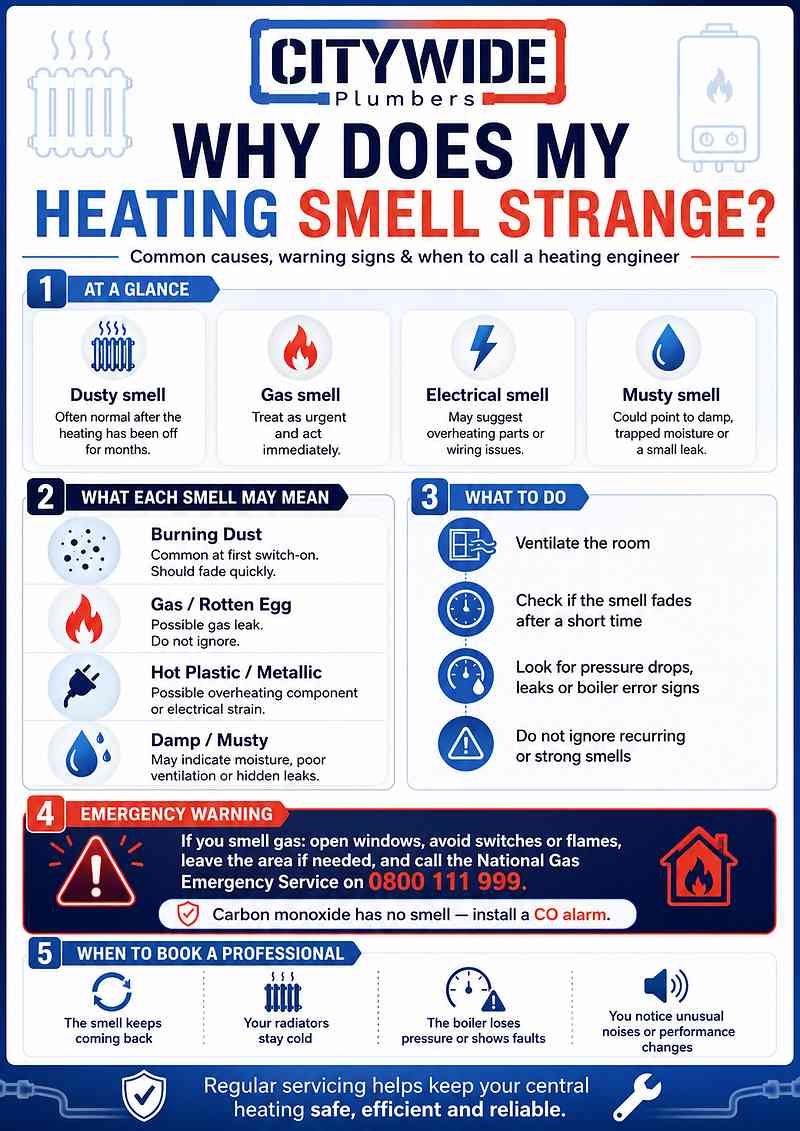
Click the infographic to view it larger inside the article.
Article at a Glance
Here is the fast answer for homeowners who want to know whether a heating smell is normal, urgent or worth checking professionally.
🌫️
Dusty smell
Often normal after months of no heating, but should fade quickly.
🚨
Gas smell
Treat as an emergency. Do not ignore or test appliances yourself.
⚡
Electrical smell
May suggest overheating parts, wiring issues or pump strain.
🛠️
Persistent smell
Book servicing or repairs if it returns, spreads or gets stronger.
Why Your Heating Smells Like Burning Dust
A light dusty or warm smell is common when the heating is switched on after summer. Dust collects on radiators, pipework and internal heating parts, then warms up as the system starts working again.
This smell should usually fade after a short period. Wipe radiator surfaces, keep the area around radiators clear and check whether the smell comes from one room or the whole system.
- Common after long periods without heating
- Usually fades once radiators warm through
- Clean visible dust from radiator surfaces
- Book a check if the smell becomes smoky or strong
Gas or Rotten Egg Smell Near the Boiler
A gas-like or rotten egg smell should always be treated seriously. Natural gas is given a strong smell so leaks can be noticed. If the smell appears near the boiler, meter, pipework or kitchen gas appliances, do not try to find the leak yourself.
Open doors and windows, avoid electrical switches, do not smoke, do not use naked flames and call the emergency gas number. After the emergency has been made safe, arrange inspection by a qualified heating professional.
- Do not switch lights or appliances on or off
- Open windows and leave the area if needed
- Call 0800 111 999 for gas emergencies
- Book follow-up checks before using the system again
Metallic, Hot Plastic or Electrical Heating Smells
A metallic, hot plastic or electrical smell can point to overheating components, a struggling pump, wiring issues, a faulty motor or a boiler part working harder than it should. This type of smell is not something to mask with air freshener or ignore.
If it happens once and disappears, monitor the system carefully. If it returns, becomes stronger, or appears with noise, error codes, pressure changes or poor heating performance, book Central Heating Repairs as soon as possible.
| Smell Type |
Possible Meaning |
Best Action |
| Burning dust |
Dust warming on radiators or heating parts |
Clean, ventilate and monitor |
| Gas / rotten egg |
Possible gas leak |
Call 0800 111 999 immediately |
| Hot plastic |
Overheating or electrical strain |
Switch off safely and book an engineer |
| Musty smell |
Damp, stagnant water or dirty radiator areas |
Check leaks, ventilation and radiator condition |
Damp, Musty or Stale Smells Around Radiators
A damp smell near radiators may come from trapped moisture, a small leak, wet flooring, poor ventilation or dust and debris behind radiator panels. It can also happen in rooms that stay cold for long periods.
Check for stains, bubbling paint, damp skirting boards, mould patches or slow pressure loss on the boiler. If the smell is close to pipework or keeps returning after cleaning, a plumber should check for hidden leaks or radiator valve issues.
- Look for damp marks around valves and pipework
- Check whether boiler pressure is dropping
- Improve ventilation in cold or closed rooms
- Call Plumbers in Fulham if leaks are suspected
When Should You Book Heating Servicing?
You should book a professional heating check if the smell is strong, unusual, recurring or linked with poor performance. Warning signs include cold radiators, banging pipes, boiler lockouts, pressure loss, yellow flame, soot marks, headaches, dizziness or a smell that appears every time the heating starts.
Regular servicing helps keep the central heating system safer, cleaner and more efficient. It also gives an engineer a chance to spot worn parts, circulation problems, leaks and ventilation issues before they lead to a breakdown.
- Book servicing before winter if possible
- Do not ignore repeated smells or boiler faults
- Check radiators, valves, pipework and boiler pressure
- Use qualified heating engineers for gas-related work
Need Help With a Strange Heating Smell?
Citywide Plumbers can inspect heating smells, radiator problems, boiler concerns and central heating performance issues across London and Fulham.