How Much Does It Cost to Install Dishwasher Plumbing in the UK?
The cost to install dishwasher plumbing in the UK can vary widely because every kitchen layout is different. A simple replacement beside an existing sink is usually more affordable than creating a new water feed, waste connection and cabinet opening from scratch. For homeowners, tenants and landlords looking for DISHWASHER PLUMBING IN LONDON, working with Citywide Plumbers can help you understand whether the job is a straightforward appliance connection or a more involved plumbing installation.
In many UK homes, a dishwasher is installed close to the kitchen sink so it can connect to the existing cold water supply and waste pipework. When the right connections are already in place, the work may be fairly quick. However, costs can rise when the pipework is old, the isolation valve is missing, the waste trap needs changing, the dishwasher is being moved to a new position, or the kitchen units need careful adjustment.
This guide explains the main cost factors behind dishwasher plumbing installation, why London and Fulham properties can be more complex, what may be included in the price and how to plan your budget before booking the work.
Dishwasher Plumbing Cost Infographic
This visual guide gives a quick overview of typical UK dishwasher plumbing costs, what makes a job cheaper or more expensive, and why London homes may need extra planning.
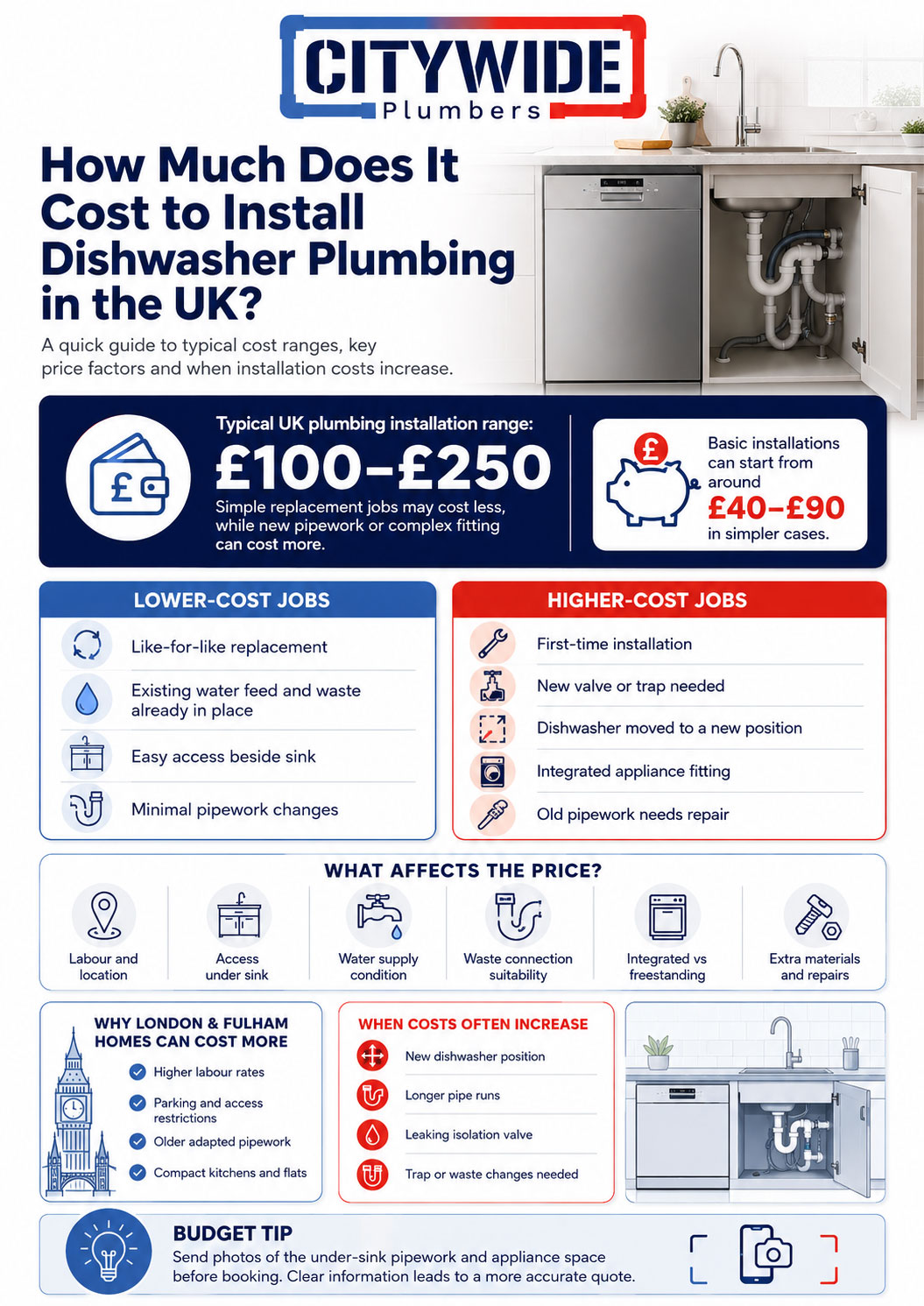
Click the infographic to view it larger
Typical UK Dishwasher Plumbing Installation Costs
For a basic dishwasher plumbing job in the UK, the cost is usually lower when the appliance is being installed in the same place as an old dishwasher and the existing connections are in good condition. This kind of work may involve disconnecting the old machine, checking the cold water feed, connecting the waste hose, testing the appliance and making sure there are no leaks under the sink.
A more realistic budget is needed when the dishwasher is being installed for the first time. A first-time installation may need a new appliance valve, adjustments to the sink waste, a spigot connection, a new trap, a waste hose route, cabinet access and testing. If the dishwasher is not directly beside the sink, the plumber may need to extend or reroute pipework, which can increase labour and materials.
Cost guides vary because some quote a very simple installation while others include more plumbing adjustment. As a practical rule, homeowners should avoid choosing based only on the cheapest figure. A low price may not include materials, access work, old appliance removal, testing or extra time if the existing kitchen plumbing is poor.
| Type of Job |
Typical Cost Level |
What It Usually Means |
| Like-for-like replacement |
Lower cost |
Existing cold feed and waste connection are already suitable |
| New dishwasher beside sink |
Moderate cost |
May need a valve, trap change, waste connection and testing |
| Dishwasher moved to new position |
Higher cost |
Pipework may need extending, rerouting or adapting |
| Integrated dishwasher installation |
Variable cost |
Plumbing may be simple, but cabinet fitting and alignment can add time |
| Problem installation |
Highest cost |
Old valves, blocked waste, access issues or hidden leaks may need repair |
Simple Replacement vs New Dishwasher Plumbing
The biggest difference in cost is whether you are replacing an existing dishwasher or installing one where there has never been a dishwasher before. A simple replacement is normally faster because the water supply, waste outlet and appliance space already exist. The plumber still needs to check that the old fittings are safe, but the overall work is usually more straightforward.
A new installation is different. The plumber must assess whether there is a suitable cold water supply, whether the sink waste can accept the dishwasher discharge, whether the hose can be routed correctly and whether the appliance can be isolated if maintenance is needed. If the cupboard layout is tight, access under the sink may also affect the time needed.
In older London homes, the existing under-sink plumbing may have been adapted several times. A dishwasher installation may reveal old compression fittings, stiff isolation valves, restricted traps or poorly supported pipework. These issues can make the job more expensive, but fixing them at the time of installation can help prevent leaks, drainage problems and callouts later.
- Like-for-like replacement is normally quicker
- First-time installation needs more planning
- New valves or waste fittings may be required
- Kitchen cabinet access can affect labour time
- Old plumbing may need correction before use
- Testing after installation is essential
What Affects the Final Dishwasher Plumbing Price?
Dishwasher plumbing costs are shaped by labour, materials, access and complexity. Labour is usually the largest part of the price, especially in London where travel time, parking and demand can affect the overall callout or hourly rate. Materials are often smaller, but they still matter if the job needs a new trap, hose, valve, connector, clips or pipework.
Access is another major factor. If the plumber can work easily under the sink and behind the appliance, the job should be simpler. If the dishwasher is integrated, boxed in, tightly fitted or difficult to pull out, more time may be needed. Where flooring or plinths restrict movement, careful handling may also be required to avoid damaging the kitchen.
Complexity increases when the waste run is too long, the dishwasher is far from the sink, the cold feed is not nearby, the existing pipes are leaking, or the sink trap is unsuitable. The best quote will reflect the actual condition of the kitchen rather than assuming all dishwasher jobs are the same.
- Distance from the sink and existing pipework
- Condition of the current water supply
- Type and position of the waste connection
- Whether the dishwasher is freestanding or integrated
- Ease of access behind units and under the sink
- Need for testing, leak repair or extra fittings
Why Dishwasher Plumbing Can Cost More in London and Fulham
Dishwasher plumbing in London can cost more than in some other UK areas because labour rates, parking, access and property layouts are often more demanding. Fulham homes include period terraces, basement flats, converted houses, compact apartments and managed rental properties. Each type of property can create different installation challenges.
For example, a small flat kitchen may have limited under-sink space, while a period conversion may have older pipework hidden behind cabinets. A basement kitchen may need more careful drainage checks, and a rental property may require a tidy, low-disruption installation that protects existing fittings. These practical details can affect how long the work takes.
London access can also influence the final price. Parking restrictions, congestion, loading issues and limited space for tools or appliance movement may add time to a job. A professional plumber will usually consider these factors when arranging the appointment, especially if the dishwasher is integrated, heavy or difficult to move safely.
- London labour rates can be higher
- Parking and access may add time
- Older properties may have adapted pipework
- Compact kitchens can limit working space
- Flats may require extra care with leaks
- Rental homes may need fast, tidy work
Water Supply and Waste Connections: What You Pay For
A dishwasher needs a reliable cold water supply and a safe route for wastewater. The water supply side may involve checking the appliance valve, confirming that the hose can connect properly and making sure the connection can be isolated if needed. If the existing valve is old, leaking, seized or hidden, replacing it may be sensible.
The waste side is just as important. Dishwasher wastewater normally connects into the kitchen sink waste arrangement. The plumber may need to check the trap, spigot, hose route and support. If the hose is poorly positioned, wastewater can sit in the pipe, drain slowly or create smells. If the waste route is restricted, the dishwasher may fail to drain properly.
Good installation is not only about making the dishwasher run once. The connection should be secure, accessible and tested under real use. This means checking for drips while the appliance fills and drains, making sure the hose is not kinked and confirming that the surrounding cabinet remains dry after the test cycle.
- Cold water feed and appliance valve check
- Waste trap and dishwasher spigot connection
- Hose route, support and protection
- Leak testing during filling and draining
- Checking that the appliance can be isolated
- Making sure wastewater drains correctly
Does an Integrated Dishwasher Cost More to Install?
An integrated dishwasher may cost more to install than a simple freestanding model because the job can involve more than plumbing. The appliance must fit inside the cabinet opening, align with the surrounding doors, sit level, connect safely and still allow enough space for hoses behind the unit. If the decorative door panel needs adjustment, this can add time.
From a plumbing point of view, the same basic requirements apply: water in, wastewater out and secure testing. However, integrated appliances can make access harder. The installer may need to remove a plinth, pull the appliance carefully into position, avoid trapping hoses and check that the final fit does not crush the pipework.
If you are replacing an existing integrated dishwasher with a model of similar size, the work may be fairly straightforward. If you are adding an integrated dishwasher for the first time, the cost can increase because cabinet preparation and service routes may need more planning.
- Integrated appliances can take longer to position
- Door alignment may need adjustment
- Hoses must not be crushed behind the unit
- Cabinet openings may need checking
- Testing can be harder when access is tight
- First-time integrated installation may cost more
Extra Work That May Increase the Installation Cost
Some dishwasher plumbing jobs become more expensive because extra work is discovered after the plumber inspects the kitchen. This does not always mean the job was quoted incorrectly. Hidden issues are common around older sink units, especially when previous repairs have been carried out quickly or when fittings have not been maintained.
Possible extras include replacing a leaking isolation valve, changing a sink trap, clearing a restricted waste pipe, extending pipework, drilling a neat route through a cabinet, replacing damaged hoses or correcting poor previous installation. If the dishwasher position is far from the sink, more materials and labour may be needed to create a practical route.
Electrical work is separate from plumbing. If there is no suitable socket, if the appliance supply is unsafe, or if a dedicated electrical change is needed, a qualified electrician may be required. A plumber can usually advise when the issue is outside plumbing scope, but electrical work should not be treated as part of a standard plumbing connection.
- Replacing a leaking or seized valve
- Changing the sink trap or waste fitting
- Extending water supply or waste pipework
- Removing or adjusting kitchen plinths
- Correcting old or poor previous plumbing
- Arranging separate electrical work if needed
How to Keep Dishwasher Plumbing Costs Under Control
The best way to control dishwasher plumbing costs is to provide clear information before the appointment. Tell the plumber whether the job is a replacement or a first-time installation, whether the appliance is freestanding or integrated, where the dishwasher will sit and whether there is already a cold water feed and waste connection nearby.
Photos can also help. A clear image of the space under the sink, the existing valves, the waste trap, the dishwasher opening and the appliance position can make the quote more accurate. If the old dishwasher is still in place, mention whether it drains properly, leaks or has any known fault.
It is also useful to check access before the plumber arrives. Clear the cupboard under the sink, remove items from around the appliance, make sure the delivery route is safe and confirm that the appliance is on site. These small steps can reduce delays and help the work stay within the expected time.
- Explain whether it is a replacement or new installation
- Send photos of the under-sink pipework
- Clear the sink cabinet before the visit
- Confirm the appliance size and position
- Mention any leaks, smells or drainage faults
- Ask what is included in the quoted price
DIY Dishwasher Installation vs Professional Plumbing
Some homeowners consider installing a dishwasher themselves, especially when replacing a freestanding appliance in the same position. However, dishwasher plumbing still involves water supply, waste discharge, leak prevention and correct hose routing. A small mistake can cause water damage behind cabinets or under flooring.
DIY may look cheaper at first, but the risk increases if the existing valve is old, the waste trap is unsuitable, the hose route is tight, or the appliance is integrated. Poorly routed waste hoses can cause smells and drainage issues, while loose inlet connections can leak during filling. In flats, a leak can become more serious if it affects the property below.
Professional plumbing is usually the safer option when the dishwasher is being installed for the first time, when pipework needs alteration, when the property is rented, when the kitchen is newly fitted or when previous plumbing problems have already appeared.
- DIY mistakes can cause hidden leaks
- Waste hose routing affects drainage
- Old valves can fail when disturbed
- Integrated appliances are harder to fit safely
- Flats need extra care to prevent water damage
- Professional testing helps reduce future problems
Getting the Right Quote for Dishwasher Plumbing
When comparing quotes, look beyond the headline price. Ask whether the quote includes labour, basic fittings, connection to the water supply, connection to the waste, leak testing and advice if the existing plumbing is unsuitable. A clear quote should help you understand what is included and what may be charged separately.
It is also worth asking what happens if the plumber finds a leaking valve, blocked waste, damaged hose or unsuitable trap. A professional should explain the issue and provide a practical option rather than simply connecting the appliance to poor pipework. Paying slightly more for a safe installation can be cheaper than repairing water damage later.
For landlords, managing agents and homeowners in Fulham, a properly installed dishwasher can reduce future maintenance calls, protect the kitchen and improve day-to-day convenience. The final price depends on the property, but the goal should always be a secure, tested and reliable connection.
For professional help with Trusted Dishwasher Plumbing Services in London, Citywide Plumbers can inspect the existing pipework, explain the likely cost factors and provide practical dishwasher plumbing support for homes and rental properties across London and Fulham.
Need a Dishwasher Plumbed in London?
If you are replacing an old dishwasher, installing one for the first time or dealing with leaks, smells or drainage issues, professional plumbing support can help protect your kitchen and avoid repeat problems.
Arrange dishwasher plumbing support for your London or Fulham property today.