What Are the Signs of Poor Dishwasher Plumbing?
A dishwasher should make daily kitchen life easier, not leave you dealing with leaks, bad smells, standing water or damaged cabinets. When the plumbing behind the appliance is poorly fitted, blocked, loose or badly routed, the warning signs often start small before turning into a larger kitchen problem. For homeowners, tenants and landlords looking for DISHWASHER PLUMBING IN LONDON, working with Citywide Plumbers can help identify whether the issue is caused by the appliance itself, the waste pipe, the water supply, the trap connection or the under-sink plumbing.
Poor dishwasher plumbing can affect drainage, hygiene, water pressure and the surrounding kitchen units. It may also cause recurring smells, slow emptying, damp flooring, mould growth and noisy pipework. In many Fulham and London homes, dishwashers are fitted in compact kitchens, converted flats, basement apartments, rental properties and older houses where pipe routes can be tight or already shared with sinks and washing machines. That makes correct installation even more important.
This guide explains the most common signs of poor dishwasher plumbing, what they may mean, why they should not be ignored and when it is sensible to call a professional plumber.
Dishwasher Plumbing Warning Signs Infographic
Use this quick visual guide to spot the most common warning signs of poor dishwasher plumbing before a small drainage issue becomes a bigger kitchen problem.
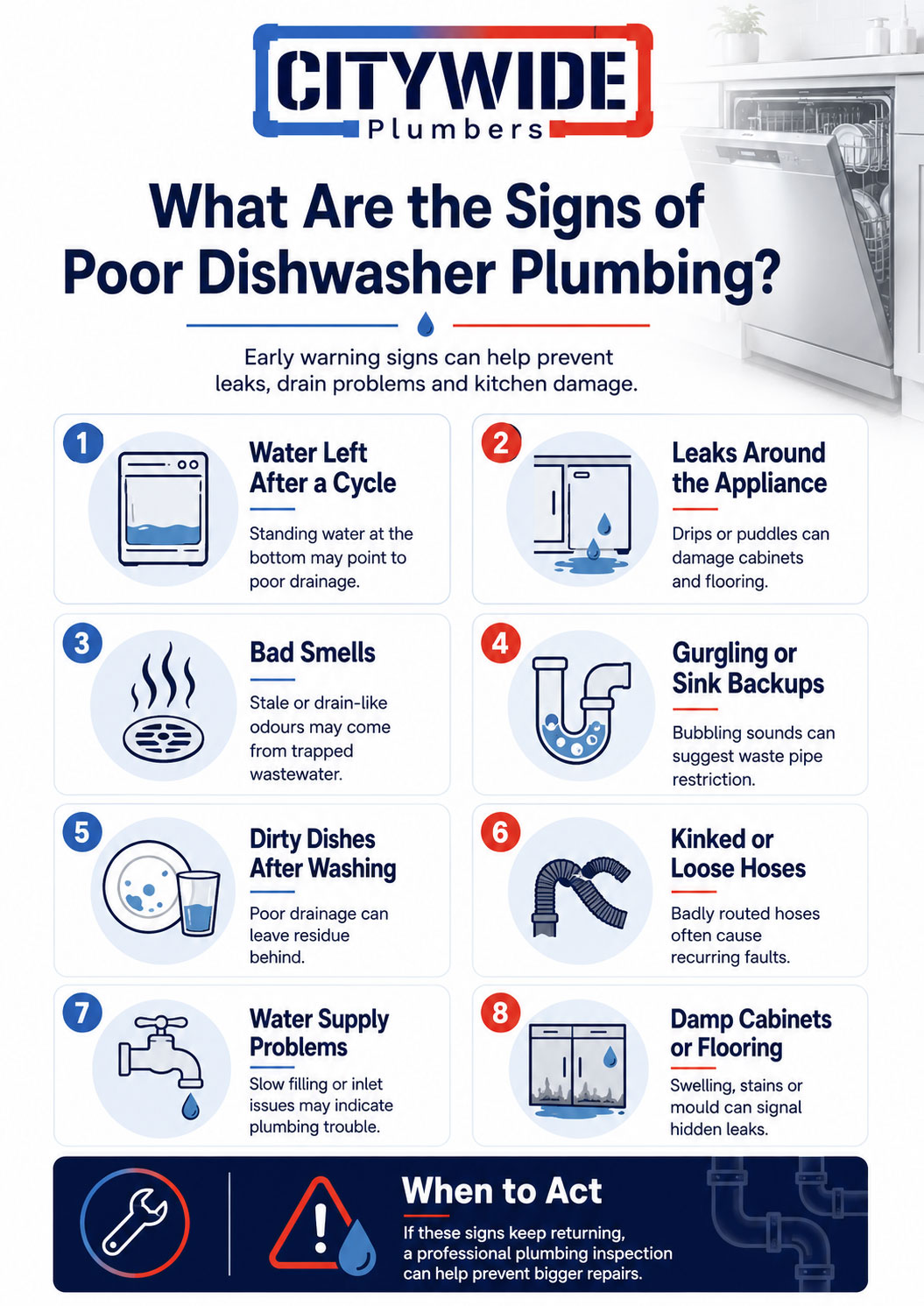
Click the infographic to view it larger
Water Left Inside the Dishwasher After a Cycle
One of the clearest signs of poor dishwasher plumbing is water left at the bottom of the machine after the cycle has finished. A small amount near the filter area can sometimes be normal, but visible standing water, repeated pooling or water that smells unpleasant may suggest the appliance is not draining correctly.
The cause may be a blocked filter, a clogged waste hose, a kinked drain pipe, a badly positioned hose or a poor connection under the sink. If the drain route is too low, crushed behind the unit or connected incorrectly to the sink waste, dirty water can struggle to leave the dishwasher properly. In some cases, water may even return into the machine after it has drained.
In London flats and terraced properties, the dishwasher waste may share a trap with the kitchen sink or washing machine. When that shared waste arrangement is restricted, the dishwasher can become the first appliance to show symptoms. Slow draining should be treated as an early warning sign, especially if it happens more than once.
- Water remains after every completed cycle
- The dishwasher makes a draining noise but does not empty
- Water disappears slowly rather than quickly
- The filter area smells stale or sour
- Water returns after the machine has already drained
- The kitchen sink drains slowly at the same time
Leaks Under or Around the Dishwasher
A leak is one of the most urgent signs that dishwasher plumbing may be poor. Even a small drip can damage kitchen cabinets, laminate flooring, skirting boards and the ceiling below. Because dishwashers are often fitted tightly between units, leaks can remain hidden until staining, swelling or a musty smell appears.
Leaks may come from the water inlet hose, waste hose, trap connection, appliance valve, door seal or a loose compression fitting. If the leak appears only when the dishwasher drains, the waste side should be checked. If it appears when the machine fills, the supply hose or inlet valve may be involved. If the leak is constant, an isolation valve or connection may not be fully secure.
Do not assume that a small leak will stay small. Vibrations from the dishwasher can loosen weak fittings over time, and water can travel behind plinths before becoming visible. In rental homes and managed properties, early inspection is especially important because water damage may affect neighbouring flats or shared structures.
- Water appears under the plinth after a wash
- The floor feels soft, swollen or damp
- There is dripping under the kitchen sink
- The leak happens during filling or draining
- Cabinet panels show staining or bubbling
- A musty smell appears near the appliance
Bad Smells Coming from the Dishwasher
Bad smells are often blamed on the dishwasher itself, but poor plumbing can be a major cause. If the appliance smells like stale water, drains, sewage or sour food waste, the problem may involve trapped waste, a blocked hose, poor drainage, siphoning or a bad connection to the sink trap.
A dishwasher waste hose should be routed so that dirty sink water does not easily flow back towards the machine. When the hose is too low, poorly clipped or connected at the wrong angle, wastewater can sit in the pipe or return into the appliance. Over time, food particles, grease and detergent residue can collect and create odour.
Smells are more likely to appear in kitchens where the sink is used heavily, where fats and oils have entered the drain, or where the appliance is not used every day. However, if cleaning the filter does not solve the smell, the plumbing should be inspected. A persistent drain smell is not only unpleasant; it can also indicate that the waste system is not working as intended.
- Drain smells return shortly after cleaning
- The odour is stronger when the sink is used
- The dishwasher smells even when empty
- There is stale water near the filter
- Food debris keeps collecting in the base
- The smell becomes worse after draining
Gurgling Sounds, Bubbling and Sink Backups
Gurgling from the kitchen sink or dishwasher area can be a sign that water and air are struggling to move through the waste pipe correctly. When the drain route is partially blocked, poorly vented or overloaded by multiple appliances, the dishwasher may push water into the sink waste and cause bubbling noises.
This is especially common where the dishwasher connects to the sink trap. If the trap is restricted by grease, food waste or scale, the dishwasher pump may force water through a narrow path. You might hear gurgling in the sink, see bubbles near the plughole or notice water rising briefly before disappearing.
A one-off gurgle may not always mean a serious issue, but repeated noises should be investigated. If the sink drains slowly, the dishwasher smells and water appears in the sink during a wash, the problem is likely to be connected to the waste system rather than only the appliance.
- The sink gurgles when the dishwasher drains
- Water rises into the sink during a cycle
- The sink and dishwasher both drain slowly
- Bubbling appears around the plughole
- There are drain smells after the machine empties
- The noise becomes louder over time
Dishes Still Look Dirty After a Full Wash
Dirty dishes are not always caused by the dishwasher programme, detergent or spray arms. Poor plumbing can also affect cleaning results. If wastewater is not leaving the appliance correctly, dirty water may remain inside the machine and redeposit grease, grit or food particles onto plates, glasses and cutlery.
Cloudy glasses, gritty residue, greasy plates and a dirty smell after a full cycle can all be linked to drainage problems. The dishwasher needs clean water coming in and wastewater going out at the right time. If either side of the plumbing is restricted, the machine may complete the cycle but fail to clean properly.
Before replacing the appliance, check whether the filter, hose, waste connection and under-sink drainage are working correctly. Many dishwasher performance problems are made worse by poor installation or blocked waste plumbing, especially in busy kitchens where the appliance runs daily.
| Warning Sign |
Possible Plumbing Cause |
Why It Matters |
| Standing water |
Blocked or kinked waste hose |
Dirty water cannot leave the appliance properly |
| Bad drain smell |
Poor hose route or waste connection |
Wastewater may be sitting in the pipework |
| Sink gurgling |
Restricted trap or shared waste issue |
Air and water are not moving freely |
| Leaks under units |
Loose fitting, valve or hose connection |
Cabinets and flooring can become damaged |
| Dirty dishes |
Poor drainage or backflow |
Wastewater may affect the wash quality |
Loose, Kinked or Poorly Routed Dishwasher Hoses
The dishwasher hoses behind the appliance are easy to overlook because they are hidden once the unit is pushed into place. However, poor hose routing is one of the most common causes of dishwasher plumbing problems. A hose can become trapped, folded, stretched, loose or badly clipped during installation.
A kinked waste hose can stop water from draining properly. A loose inlet hose can leak when the machine fills. A waste hose without secure support can move during the cycle and gradually pull away from the connection. If the dishwasher has recently been moved, replaced or pushed back after cleaning, the hoses should be checked.
Correct routing matters because the dishwasher pump is designed to move water through a controlled path. When the pipe route is too tight or poorly positioned, pressure builds up and the machine becomes less reliable. In fitted kitchens, this problem may be hidden behind plinths and side panels, so symptoms may appear before the cause is visible.
- The hose is crushed behind the appliance
- The waste pipe bends sharply under the sink
- Clips or brackets are missing
- The hose connection moves during a cycle
- The appliance was recently moved or replaced
- Leaks appear only after the dishwasher drains
Water Supply and Inlet Problems
Poor dishwasher plumbing is not only about drainage. The cold water supply also needs to be reliable, secure and correctly connected. If the dishwasher fills slowly, stops mid-cycle, shows water supply errors or makes unusual filling noises, the inlet side of the plumbing may need attention.
Common causes include a partially closed isolation valve, a damaged inlet hose, low water pressure, debris in the filter, a poor connection or an old valve that no longer works smoothly. In some older kitchens, appliance valves may be difficult to access or may not shut off properly, which creates a problem during maintenance or replacement.
A good dishwasher connection should allow the appliance to fill safely and should also allow the water to be isolated when required. If you cannot turn off the appliance supply easily, or if the valve is stiff, leaking or hidden behind units, it is worth arranging a plumbing inspection before the next problem becomes urgent.
- The dishwasher fills very slowly
- The cycle stops with a water supply warning
- The inlet hose shows wear or bulging
- The isolation valve is leaking or stiff
- Water pressure seems inconsistent
- The appliance cannot be isolated safely
Cabinet, Flooring and Damp Warning Signs
Sometimes the first sign of poor dishwasher plumbing is not inside the appliance at all. It appears in the kitchen units, flooring or wall finishes around it. Water can travel under plinths, behind cabinets and beneath floor coverings before it becomes obvious.
Look for swollen kickboards, bubbling laminate, peeling vinyl, damp smells, dark staining, soft flooring or mould around the back of the cabinet. These signs may indicate a slow leak from the inlet, waste connection, trap, valve or appliance base. Even if the dishwasher seems to run normally, hidden moisture can continue causing damage.
In flats, maisonettes and multi-storey properties, leaks from dishwashers should be treated seriously because water may affect the ceiling or electrics below. Early plumbing checks can reduce damage, prevent recurring damp and help avoid more expensive repairs to flooring and joinery.
- Kitchen plinths are swollen or stained
- The floor feels soft near the appliance
- There is mould inside the cabinet
- A damp smell remains after cleaning
- Paint or laminate is bubbling
- Water marks appear below the kitchen
Common Dishwasher Plumbing Mistakes in London Homes
Many dishwasher plumbing issues begin with installation mistakes. In some homes, the dishwasher is connected quickly during a kitchen refit without enough attention to waste height, hose position, valve access and trap layout. In other cases, an older appliance is replaced but the existing pipework is not checked.
Common mistakes include connecting the waste hose too low, leaving the hose unsupported, using poor-quality fittings, overtightening plastic connections, failing to check for leaks after the first cycle, using a trap that is already restricted or pushing the appliance back until the hoses are crushed. These mistakes can create repeated faults even when the dishwasher itself is in good condition.
Fulham properties can include period conversions, basement kitchens, compact flats and busy family homes. Each layout can have different plumbing challenges. A professional plumber can check whether the appliance connection is suitable for the space, whether the waste route is clear and whether the supply valve can be accessed when needed.
- Waste hose fitted too low or without support
- Dishwasher pushed back onto the hoses
- Old trap reused without checking for blockages
- Inlet valve hidden or difficult to isolate
- Loose clips around the waste connection
- No full test cycle after installation
When Should You Call a Plumber for Dishwasher Plumbing?
You should call a plumber if the dishwasher leaks, repeatedly fails to drain, smells of drains, causes sink gurgling, leaves standing water, affects the kitchen sink waste or shows signs of damp around nearby units. These symptoms may point to plumbing rather than an appliance fault, especially when cleaning the filter does not solve the problem.
Professional inspection is also sensible when installing a new dishwasher, replacing an integrated appliance, moving a dishwasher to a new position or renovating a kitchen. The plumber can check the cold water feed, isolation valve, trap connection, waste route, hose condition and under-sink layout before the appliance is used regularly.
Calling early can prevent a small issue from becoming a larger leak or blockage. It can also help protect cabinets, flooring and neighbouring rooms from water damage. A dishwasher is a useful kitchen appliance, but it depends on safe and practical plumbing to work properly every day.
For reliable support with Trusted Dishwasher Plumbing Services in London, Citywide Plumbers can help homeowners, landlords and tenants in Fulham and across London deal with leaks, drainage faults, installation problems and poor dishwasher connections before they cause more disruption.
Need Help with Dishwasher Plumbing in London?
If your dishwasher is leaking, not draining, smelling unpleasant or causing problems around the kitchen sink, professional plumbing support can help identify the cause and protect your home from further damage.
Book dishwasher plumbing support for your London or Fulham property today.